
NRTL Field Evaluations

NRTL Services Keep Facilities Safe and Production Moving
Third-party NRTL field evaluations provide manufacturing and industrial facilities with the unique opportunity to quickly solve issues related to NRTL unlisted and unlabeled equipment in the field.
OSHA requires that electrical equipment in manufacturing or workplace environments shall be labeled by an accredited Nationally Recognized Testing Laboratory (NRTL). An electrical inspector or AHJ will remove equipment from service if the electrical panels are found not to be labeled.
In many cases, electrical panels on manufacturing equipment imported to the U.S. from other countries get to the end user’s site and don’t have an NRTL (or UL) marking. These panels will fail electrical inspections, and most of the time a licensed electrician will not even connect power to them. If that happens to you, a third-party NRTL field evaluation can help get the project back.
What is a NRTL Field Evaluation?
Third-party NRTL field evaluations include an onsite, non-destructive compliance assessment of your equipment. They can be leveraged for one-of-a-kind custom or prototype equipment not intended for mass production or equipment from Europe and Asia. When a piece of equipment does face a red-tag threat, Excel Engineering can be dispatched to your facility to address the issue.
How a NRTL Field Evaluation Works
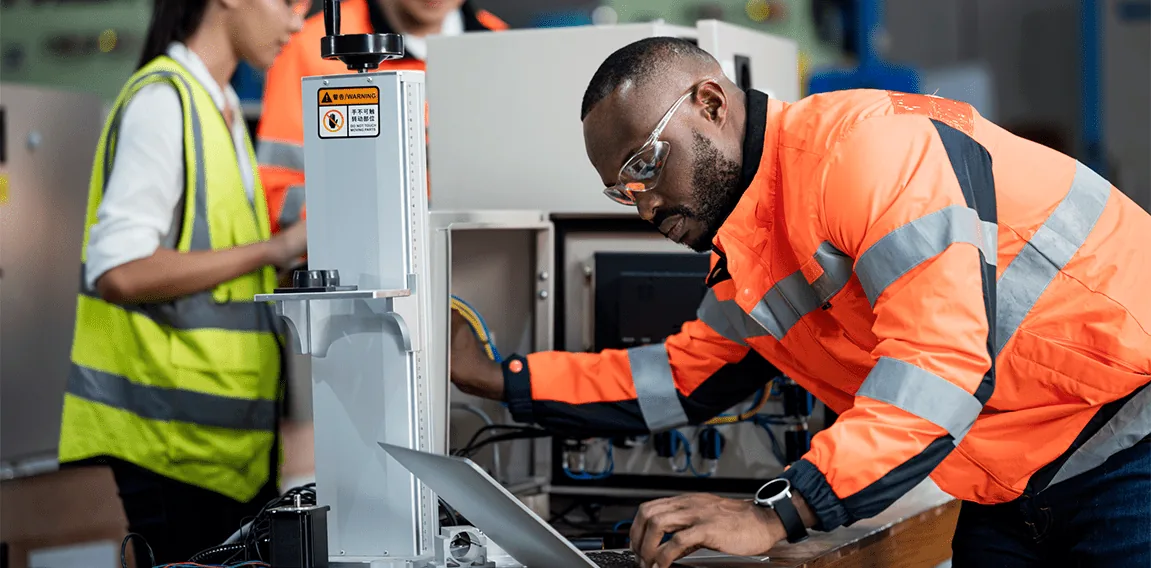
- Excel Engineering sends an expert to evaluate the equipment in question for any risks related to shock, fire, or other electrical hazards, all while accounting for the surrounding environment and anyone who may come into direct contact with the electrical panel.
- If the field evaluation finds the equipment complies with the referenced standards, the equipment is labeled, and a detailed report is issued to both the end user and the AHJ recommending that the equipment be allowed to be installed and operated.
- If the field evaluation finds the equipment does NOT comply with the referenced standards, the report will explain each discrepancy. The information can be used as a roadmap for the end user as you determine the proper corrections needed for each discrepancy.
- Once corrections are made, Excel Engineering will make another site visit to review the corrected electrical panel. During the follow-up evaluation, if all discrepancies are corrected, the evaluator will field label the equipment and issue the compliance report to the end user and the AHJ recommending that the equipment be allowed to be installed and operated.
It is essential to follow all the applicable standards for NRTL field evaluations and have a knowledgeable, properly licensed Professional Engineer to perform them. Excel Engineering specializes in providing onsite third-party assessment for our clients to help keep their facilities safe and compliant and their production moving forward.
- Documentation review
- Inspection of enclosures
- Grounding verification
- Wiring inspection
- Guarding of live parts
- Overcurrent protection review
- Critical component verification
- SCCR review
- Limited non-destructive testing where appropriate
- Missing NRTL certification marks
- Use of unlisted critical components
- Inadequate enclosure protection for the environment
- Improper guarding of energized parts
- Insufficient grounding or bonding
- Improper overcurrent protection
- Wiring that does not meet code requirements
- Missing safety markings or documentation
- SCCR concerns
- Equipment modifications that were not evaluated for compliance
While some international vendors are familiar and compliant with the American market, many imported machines arrive with a CE mark but no recognized NRTL or UL certification. This is common with equipment imported from China, Germany, France, Italy, South Korea, Taiwan, and other countries throughout Europe and Asia.
A CE mark does not typically satisfy OSHA requirements because it is a manufacturer's self-certification rather than an independent third-party certification.
However, imported machinery can often be field evaluated after installation. The evaluator reviews the equipment against applicable U.S. electrical safety standards and identifies any deficiencies that must be corrected. After compliance is demonstrated, the equipment may receive a field evaluation label and compliance report for AHJ acceptance.- Engage a qualified field evaluator.
- Provide available documentation such as drawings, manuals, and bills of material.
- Complete the onsite equipment evaluation.
- Correct any deficiencies identified.
- Schedule a follow-up inspection if needed.
- Receive a field evaluation label and compliance report once compliance is verified.
If your electrical equipment does not bear a UL, CSA, TUV, or ETL Listing and Label, or other approved NRTL certification mark, it may not be accepted by your electrical inspector or Authority Having Jurisdiction (AHJ). The Conformité Européenne(CE) mark is not a recognized marking in the United States as it is intended for legal compliance in European markets only.
Your options typically include:- Replacing the equipment with a listed Listed equivalent.
- Obtaining a third-party field evaluation performed by a qualified field evaluator operating under applicable state regulations and NFPA 791 guidance.
During a field evaluation, the equipment is inspected against applicable standards such as the National Electrical Code (NEC), NFPA 79, UL 508A, UL 61010-1, and other relevant industry standards. If deficiencies are identified, corrective actions can be taken and the equipment re-inspected. Once compliance is demonstrated, a field evaluation label will be applied and a compliance report issued for to the AHJ.
At Excel Engineering, we have completed hundreds of third-party field evaluations on industrial machinery, lab equipment, chillers, process skids, packaging lines, and custom control panels. Our licensed Professional Engineers (PEs) help clients identify compliance issues, develop corrective actions, and obtain field labeling so equipment can be placed into service safely and efficiently.If your electrical inspector or Authority Having Jurisdiction (AHJ) has rejected equipment because it lacks a UL Listing or other approved NRTL certification mark, replacing the equipment is not always necessary.
In many jurisdictions, workplace electrical equipment must be approved through a recognized evaluation process before it can be energized and placed into service. Equipment that does not bear an approved NRTL certification mark may be red-tagged or rejected during inspection. A CE mark alone is generally not sufficient because it is a manufacturer's self-declaration rather than an independent third-party certification.
One common solution is a third-party field evaluation. During the evaluation, a qualified field evaluator inspects the equipment against applicable U.S. electrical safety standards and identifies any deficiencies that must be corrected. Once compliance has been demonstrated, the equipment may receive a field evaluation label and compliance report for the AHJ's consideration.
Many AHJs accept properly documented field evaluations performed by qualified independent field evaluators, such as Professional Engineers (PEs). The evaluation provides a detailed engineering review of the equipment and documents compliance with applicable safety standards. The final report typically includes equipment identification, the standards used for the evaluation, inspection results, compliance findings, field label numbers applied, a list of addressed discrepancies (if any), and a statement of conformity when the equipment is found to be compliant. In many cases, this report becomes part of the documentation package submitted to the AHJ to support approval and energization of the equipment.
Not necessarily. A Third-Party Field Evaluation and a Nationally Recognized Testing Laboratory (NRTL) certification are two different compliance pathways.
An NRTL certification label is issued by an OSHA-recognized NRTL organization such as UL, Intertek (ETL), CSA, or other approved testing laboratories. In contrast, some jurisdictions, including Minnesota, allow a licensed Professional Engineer (PE) to perform a field evaluation and apply an evaluation label in lieu of an NRTL or UL listing under certain circumstances.
For equipment that is custom-built, modified after manufacture, imported, or produced in low quantities, a field evaluation can often provide a practical and cost-effective path to approval. The evaluation typically verifies compliance with applicable safety requirements and standards and provides documentation that can be reviewed by the Authority Having Jurisdiction (AHJ).
Before proceeding, it is important to understand your facility's requirements. Some owners, insurance providers, or corporate standards may specifically require an NRTL certification label, while others will accept a field evaluation conducted by a licensed Professional Engineer where permitted by local regulations.
We're ready to help with your next project.
Excel is an experienced, dedicated partner that brings a detail-oriented and relationship-driven approach to every project to ensure it exceeds your goals. Here are just a few of the reasons to partner with us for your NRTL field evaluation needs.
Contact us now!
"*" indicates required fields